
How It Works: Biosecurity & Technology
Production zones are fenced off from public and community areas, for safety and biosecurity. Drones, CCTV, and remote monitoring are for crop management and security.
Biosecurity, Zoning & Monitoring
Physical barriers, automated monitoring, and strict zoning safeguard livestock, poultry, and crops.
Fenced Production Zones
Production zones are fenced off from public and community areas, for safety and biosecurity. This perimeter protects farm assets and guarantees strict animal disease control.
Drones, CCTV & Remote Monitoring
Drones, CCTV, and remote monitoring are for crop management and security. Aerial sensors track crop vigor, hydration stress, and perimeter integrity in real time.
Housing Estate & Resort (Proposed)
The housing estate and resort are proposed, and they sit outside the production zone. Keeping residential areas separated maintains biosecurity for agricultural cycles.
Land Preservation & Clean Biogas Energy
Agricultural planning strictly respects environmental topographies to avoid soil degradation and protect natural habitats.
Protecting Waterways & Wetlands
Farming avoids natural water courses, wetlands, and land prone to flooding or erosion. Buffer zones preserve natural drainage and prevent soil runoff.
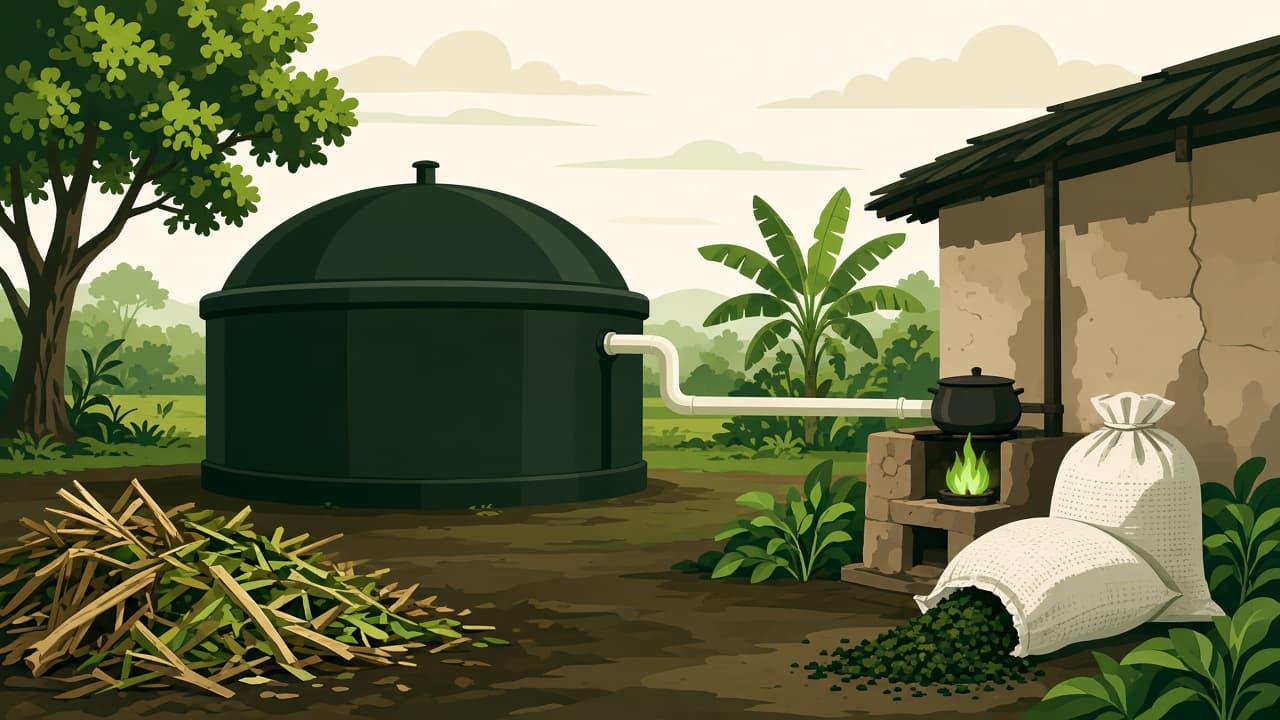
Biogas to Curb Tree-Felling for Charcoal
The biogas supply is meant to reduce tree-felling for charcoal. By transforming crop residue and animal waste into clean gas, it offers a sustainable alternative fuel.
Sigo-Baido Operational Parameters
- Production Zone Separation: Complete fencing creates distinct biosecurity perimeters between fields, animal units, and community thoroughfares.
- Zero Contamination of Water: Strict exclusion of farming from natural watercourses prevents chemical or fertilizer seepage.
- Autonomous Drone Reconnaissance: Regular flights inspect perimeter fencing, crop growth, and drainage integrity.
- Proposed Developments: Housing estate and resort concepts are strictly exterior to the agricultural production zones.